Surfaces · 3 min read
Floor Area: the method, worked through
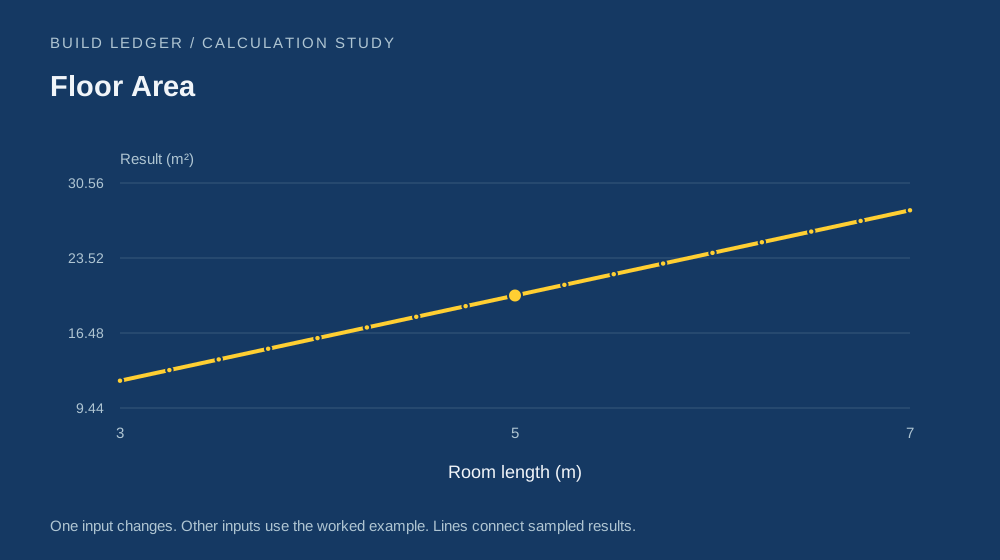
A rectangular floor area is the starting point for many material takeoffs.
Material quantities and practical project arithmetic, collected on one planning board. Estimates for purchasing, not structural design.
Surfaces · 2 inputs
A rectangular floor area is the starting point for many material takeoffs.
Open calculator ↗Room perimeter supports planning for skirting, trim and wall runs.
Open calculator ↗Net wall area removes doors and windows from a simple rectangular elevation.
Open calculator ↗Four wall faces can be estimated from room perimeter and uniform height.
Open calculator ↗Paint volume connects surface area, coat count and product coverage.
Open calculator ↗Whole-can purchasing rounds a calculated volume up to the next available pack.
Open calculator ↗A tile takeoff divides the ordered coverage by the face area of one tile.
Open calculator ↗Packaging coverage converts a material-area estimate into purchasable boxes.
Open calculator ↗Flooring is usually purchased in complete packs rather than exact square metres.
Open calculator ↗Counting full-height strips is the first stage of a wallpaper estimate.
Open calculator ↗Usable full strips per roll determine the number of complete wallpaper rolls.
Open calculator ↗A linear takeoff converts trim length into stock board quantities.
Open calculator ↗A uniform slab volume follows its plan area multiplied by thickness.
Open calculator ↗Bagged material yield translates a volume requirement into a whole-bag order.
Open calculator ↗A circular pad uses disk area times uniform depth.
Open calculator ↗A rectangular trench volume estimates the in-place material to remove.
Open calculator ↗A gravel layer is estimated as area times settled depth.
Open calculator ↗Bulk density converts a volume estimate into a mass-based order.
Open calculator ↗Excavated material often occupies a larger loose volume than it did in place.
Open calculator ↗A volume-based haul count rounds up partial final loads.
Open calculator ↗Paver face area provides a basic count for a regular surface.
Open calculator ↗A straight edging run can be converted into repeated stone units.
Open calculator ↗A modular fence run is divided into panel-sized spans.
Open calculator ↗One isolated straight run needs a post at both ends and one between adjacent panels.
Open calculator ↗Parallel boards and their gaps determine how many fit across a deck.
Open calculator ↗Multiplying board count by run length estimates the total linear material.
Open calculator ↗Sheet coverage gives a quick purchasing estimate for a surface.
Open calculator ↗Regular spacing plus both endpoints gives a simple count along one run.
Open calculator ↗Pack coverage converts a measured area into purchasable insulation quantities.
Open calculator ↗A straight slope forms the hypotenuse of a triangle with horizontal run and rise.
Open calculator ↗Pitch angle converts a rise-to-run ratio into an angular description.
Open calculator ↗A rectangular roof plane uses its actual sloping dimension, rather than its horizontal projection.
Open calculator ↗Slope percent expresses rise per one hundred units of horizontal run.
Open calculator ↗A straight ramp surface is longer than its horizontal projection.
Open calculator ↗Dividing a total height into equal rises provides a preliminary stair dimension.
Open calculator ↗Timber volume follows the product of actual dimensions and piece count.
Open calculator ↗A board foot is a lumber volume equal to one square foot at one inch thick.
Open calculator ↗A quantity takeoff becomes a base estimate when multiplied by a quoted unit price.
Open calculator ↗An explicit percentage allowance separates measured need from purchasing overhead.
Open calculator ↗A production rate links task quantity to estimated work time.
Open calculator ↗A simple crew model distributes person-hours across workers and working days.
Open calculator ↗Container volume provides a first estimate of waste collection needs.
Open calculator ↗A rectangular joint cross-section times its length estimates sealant volume.
Open calculator ↗Total sealant demand is rounded up to whole cartridges.
Open calculator ↗Known joint length and cross-section give a direct grout-volume estimate.
Open calculator ↗Measured coverage from a trial area can improve later quantity estimates.
Open calculator ↗The international foot is exactly 0.3048 metres.
Open calculator ↗Area conversion squares the length conversion factor.
Open calculator ↗Volume conversion cubes the exact yard-to-metre factor.
Open calculator ↗The international inch equals exactly 25.4 millimetres.
Open calculator ↗No matching tools. Try a shorter search or choose all categories.
A rectangular floor area is the starting point for many material takeoffs.
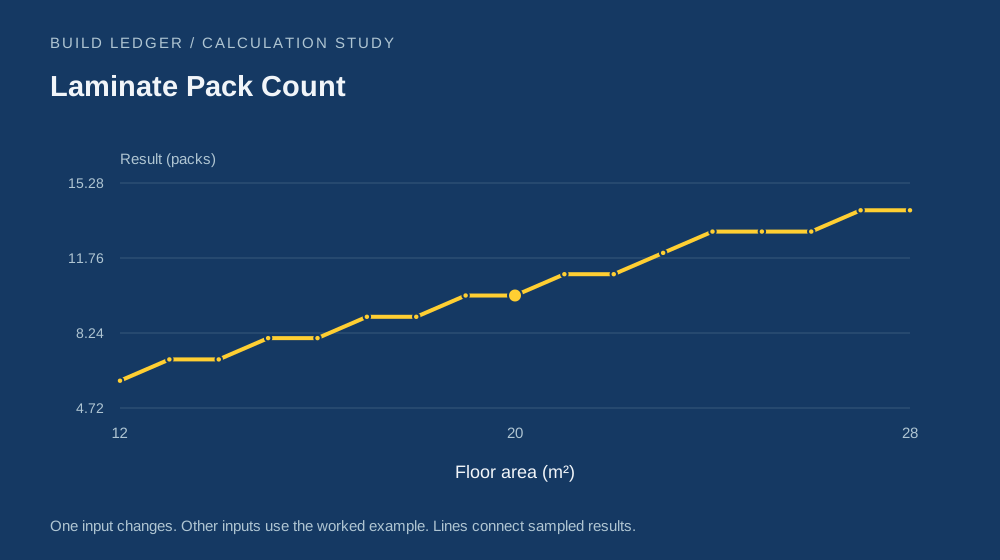
Flooring is usually purchased in complete packs rather than exact square metres.
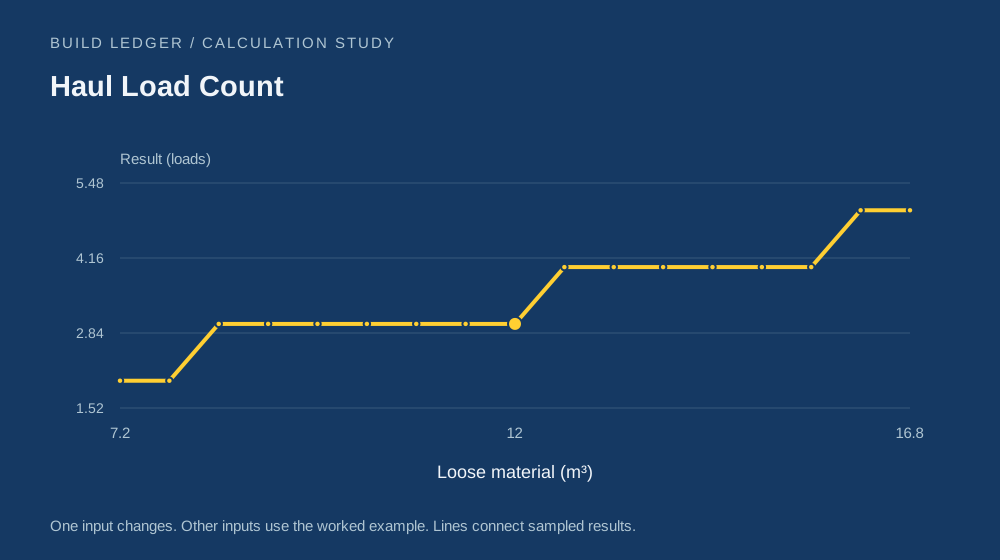
A volume-based haul count rounds up partial final loads.